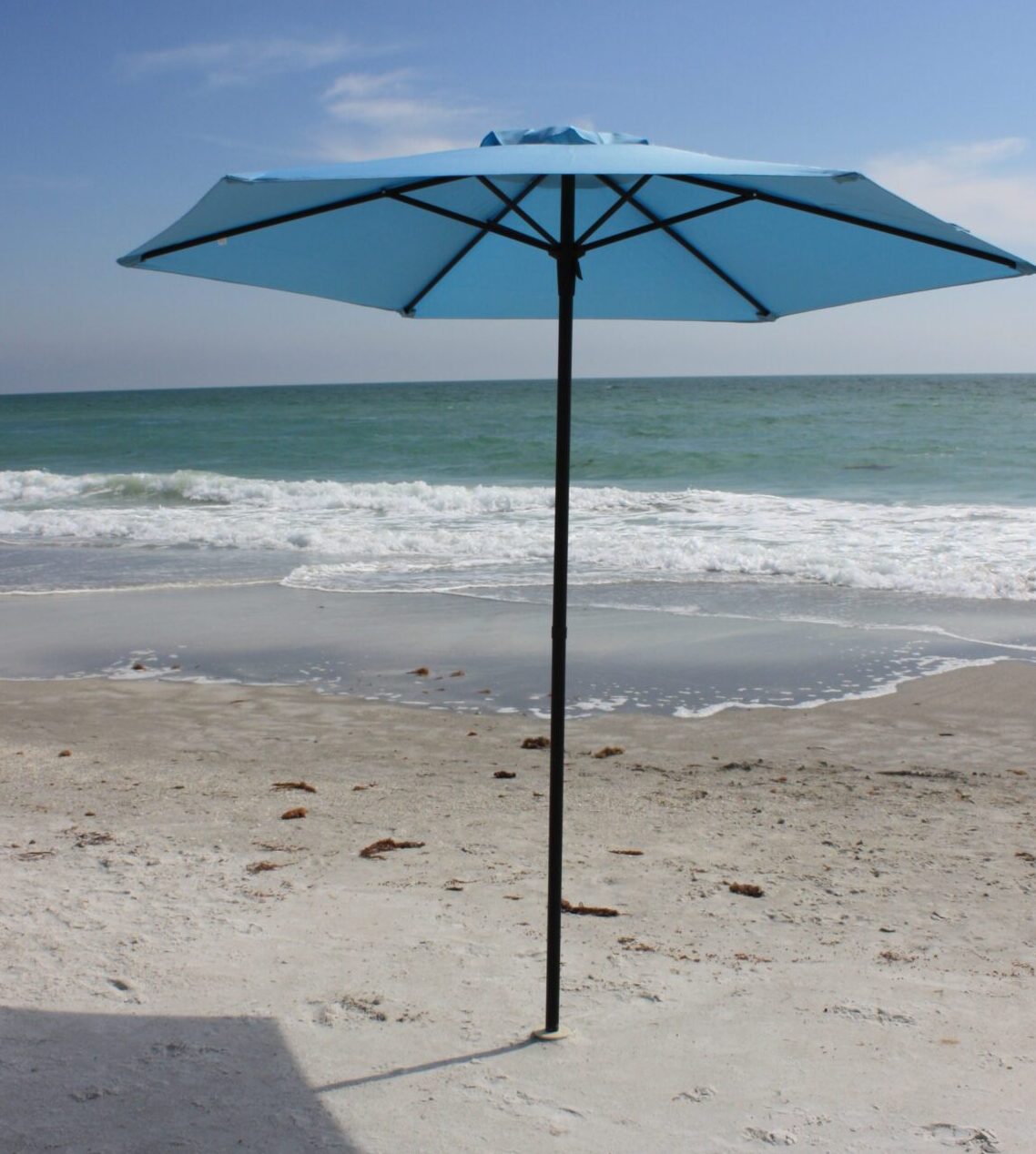
The million dollar question! The choice of anchor is dependent on the size of the umbrella, its purpose, and its location. Most people are familiar with patio umbrellas so we’ll start there. Patio umbrellas do not necessarily require anchors, as they are usually placed inside another supporting structure (patio table). They do, however, require stands to keep them stable. Stands are similar to an anchors in that they keep the lower end of the umbrella from moving. Umbrella stands tend to be made of iron, steel or cement. They are heavy, lack portability and restrict their use to umbrellas that are placed in more permanent locations. Patio umbrellas, market umbrellas and farmers market umbrellas tend to uses these heavier, bulkier, permanent stands.
Another type of umbrella stronghold is the spike style umbrella. Simple in design, this anchor is a tapered, pointed, metal projection that is thrust into the ground and then the umbrella is attached to it. It is usually secured by a locking mechanism that often times is a threaded screw placed perpendicular to the umbrella and tightened against the shaft to keep it in place.
Auger style umbrella anchors are another option when looking for ways to keep an umbrella upright. These anchors are elongated cylinders with threads at one end and usually a handle at the opposite. This style of umbrella anchor is deployed by positioning the pointed end of the anchor towards the ground, applying downward pressure while simultaneously twisting the handles in a circular motion to drive the anchor into the sand. These, too, have a second screw mechanism located near the top and side of the anchor to stabilize the umbrella its attached to.
Weighted sand bags are another popular choice when looking to anchor an umbrella in the sand. This device uses a combination of tactics to secure the umbrella. The first step, filling the sand bag. This requires the gathering of sand from one spot and placing it into the sand bag. Kits that contain the bag and shovel are often provided at the time of purchase. Once the sand bag is filled to the recommended limit, the umbrella is assembled and secured to it.
Beach goers may also be familiar with tie-down canopy style shelters. Not necessarily an umbrella but close enough for this discussion of beach shelter options. The canopy system uses ropes of various sizes to “tie-down” umbrella-like fabrics providing shade. The ropes are tied to various parts of the material, usually the corners. The ropes are spaced out at different lengths then tied to ground spikes to retain the assembly in position. Often times mini sand bags are thrown into the mix for added support.
Umbrella-stops are new to the market. With an umbrella-stop system, a hollow pipe (called a dowel) is used to remove small amounts of sand. Once the hole is half as deep as the dowel, the dowel is placed in the hole and an “umbrella stop” is slid over and down to ground level. A steel or aluminum poled umbrella can then assembled on top of the exposed dowel. This type of foothold supports the umbrella from the inside when compared to other anchors that support from the outside. It does not have a locking mechanism so beach goers must be vigilant of conditions and not take unnecessary risks on windy days. Check out the punch-style system here…BeachBumbrella